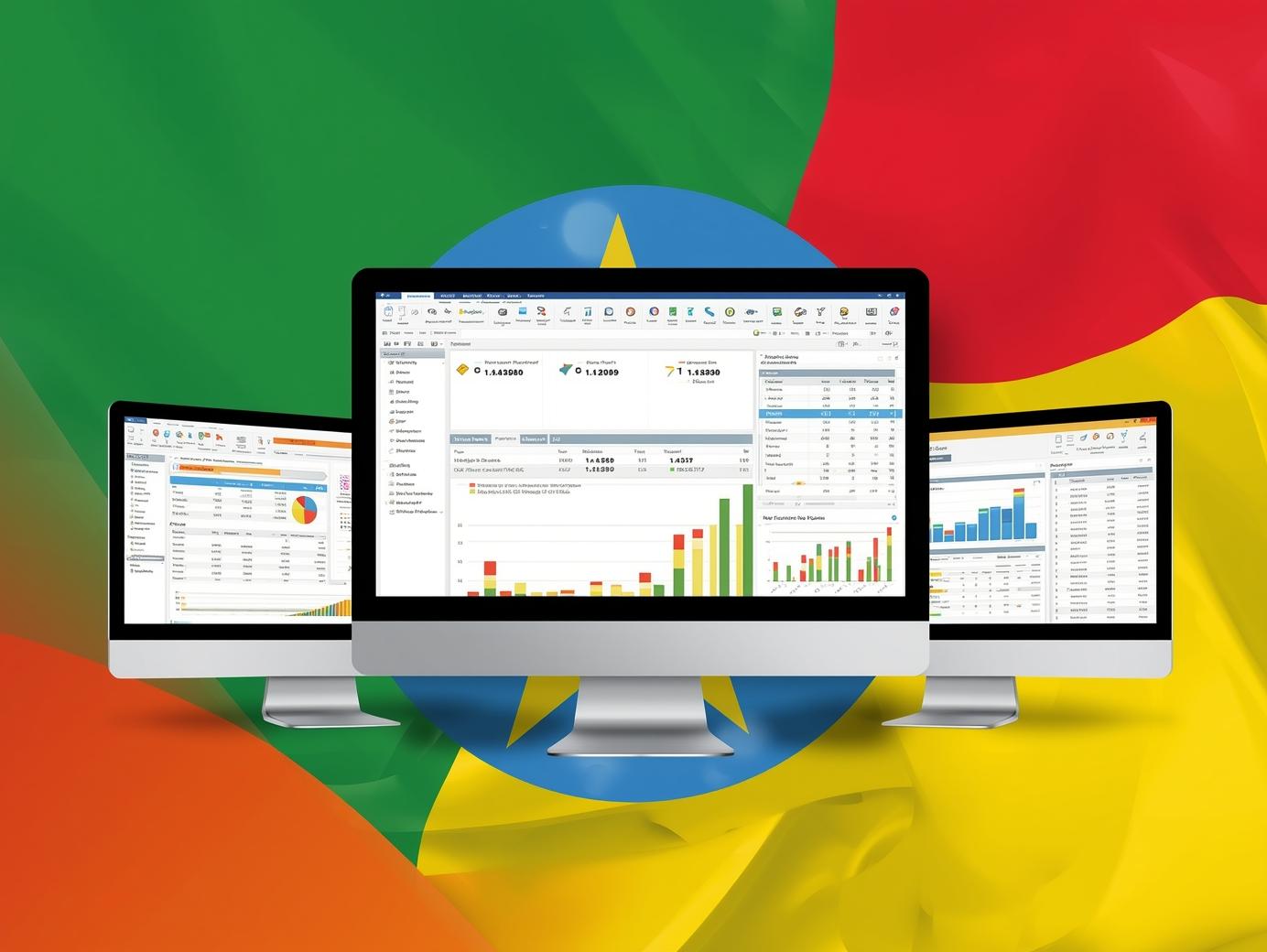

In today’s rapidly evolving global economy, businesses across Africa are seeking innovative ways to optimize operations, enhance efficiency, and drive sustainable growth. The continent, particularly Ethiopia, is witnessing dynamic economic shifts, with businesses striving to compete on a global scale while navigating unique local challenges. Enterprise Resource Planning (ERP) software stands at the forefront of this transformation, providing a unified platform to manage complex business processes, foster transparency, and unlock unprecedented levels of productivity. ZalatTech is proud to be a leading provider of enterprise ERP software solutions, specifically tailored to meet the unique needs and growth ambitions of businesses in Ethiopia and across the broader African continent. We understand that digital transformation is not just about technology, but about empowering organizations to achieve their full potential.
Why the Use of ERP?
At its core, an ERP system integrates various discrete business functions into a single, comprehensive, and cohesive system. Imagine the traditional silos of finance, human resources, manufacturing, supply chain, sales, and procurement, all communicating seamlessly, sharing real-time data from a central repository. This deep integration is precisely what ERP offers, moving businesses beyond fragmented systems, manual data entry, and inefficient processes that often lead to errors, delays, and a lack of holistic visibility. By breaking down these departmental barriers, ERP creates a unified operational ecosystem.
The benefits of implementing a robust ERP system are profound and far-reaching:
- Increased Productivity and Efficiency: One of the most immediate and tangible benefits of ERP is the significant boost in operational efficiency. By automating routine, repetitive tasks such as invoice generation, payroll processing, order fulfillment, and inventory tracking, ERP systems liberate your employees from tedious administrative burdens. This automation not only drastically reduces the potential for human error but also accelerates critical business cycles, such as the order-to-cash process. For instance, an integrated ERP can automatically generate a sales order, trigger inventory allocation, initiate shipping, and create an invoice, all with minimal manual intervention, allowing staff to dedicate their valuable time to more strategic, value-adding activities like customer relationship building or product innovation.
- Deeper Insights and Better Decision-Making: In a competitive landscape, timely and accurate information is power. ERP systems eliminate disparate information silos, providing a single, authoritative source of truth for all business data. This centralized data hub enables real-time reporting and sophisticated analytics, transforming raw data into actionable intelligence. Management can access customizable dashboards that display key performance indicators (KPIs) across all functions – from sales trends and production bottlenecks to financial health and supply chain performance. This comprehensive, up-to-the-minute view empowers leadership to identify emerging patterns, predict market shifts, and make swift, informed, and strategic decisions that directly impact profitability and market positioning, rather than relying on outdated or incomplete information.
- Significant Cost Savings: While an initial investment is required, ERP systems consistently lead to substantial long-term cost reductions and an impressive return on investment. These savings manifest in various ways: optimized inventory levels reduce carrying costs and minimize waste; streamlined procurement processes lead to better vendor negotiations and reduced purchasing spend; automation decreases administrative overhead and the need for excessive manual labor; and improved forecasting minimizes stockouts or overstocking. By eliminating redundant systems and consolidating operations, businesses can also reduce IT infrastructure and maintenance costs associated with managing multiple disparate software solutions.
- Enhanced Collaboration and Communication: An integrated ERP system inherently fosters seamless communication and collaboration across different departments that traditionally operate in isolation. When sales, production, finance, and logistics teams share the same real-time data, they gain a unified understanding of the business’s current state and objectives. For example, a sales team can instantly check inventory levels before promising delivery dates, while the production team can adjust schedules based on real-time order influx. This shared visibility and interconnectedness improve cross-departmental coordination, reduce miscommunications, and cultivate a more cohesive and synergistic organizational culture.
- Scalability and Flexibility for Growth: Modern ERP platforms are meticulously designed with inherent flexibility and scalability, making them the ideal technological backbone for growing businesses. As your organization expands into new markets, launches new product lines, or experiences increased transaction volumes, your ERP system can seamlessly adapt. You can implement core functionality initially and easily add more modules, users, or capabilities as your requirements evolve. This adaptability ensures that your IT infrastructure supports, rather than hinders, your business’s organic growth and strategic pivots, allowing you to scale operations without the need for disruptive system overhauls.
- Improved Customer Service and Satisfaction: A core strength of ERP lies in its ability to provide a comprehensive, 360-degree view of your customers. By centralizing all customer-related information—including contact details, purchase history, past interactions, support tickets, and preferences—ERP systems enable your customer service and sales teams to deliver quicker, more personalized, and highly efficient support. This holistic understanding allows for proactive engagement, faster issue resolution, and tailored offerings, ultimately leading to significantly increased customer satisfaction and fostering long-term loyalty.
- Robust Regulatory Compliance and Reduced Risk: Operating in diverse markets, especially across Africa, often involves navigating a complex web of local and international regulatory requirements. ERP systems are equipped with built-in compliance features that help organizations adhere to evolving financial reporting standards, tax regulations, and industry-specific mandates. By centralizing data and automating reporting, ERP enhances business visibility and control, making it easier to audit processes, identify potential non-compliance issues, and proactively mitigate operational and financial risks, thereby safeguarding the business’s reputation and legal standing.
Why Enterprise Solutions?
Enterprise software solutions are not merely applications; they are extensive, large-scale systems meticulously engineered to support and streamline a multitude of organizational functions within a large business or complex entity. Unlike off-the-shelf software designed for individual users or small teams, enterprise solutions are built to handle the intricate processes, vast data volumes, and diverse user requirements of an entire enterprise. They are the digital infrastructure that enables large organizations to operate with precision and strategic foresight.
Here’s why enterprise solutions, particularly ERP, are indispensable for businesses aiming for significant growth, stability, and market leadership:
- Comprehensive Integrated Management: The defining characteristic of enterprise solutions, especially ERP, is their unparalleled ability to provide a truly holistic and integrated view of the entire organization. Instead of relying on a patchwork of disparate software applications for different departments (e.g., one for accounting, another for inventory, a third for HR), an enterprise solution unifies these operations. This means that data flows seamlessly between finance, human resources, supply chain management (SCM), customer relationship management (CRM), manufacturing, and other core functions. This interconnectedness ensures that every department operates with the same, consistent, and up-to-date information, eliminating data discrepancies and fostering a unified operational strategy.
- Optimized and Streamlined Processes: Enterprise solutions are fundamentally designed to identify, simplify, and automate complex business processes across all departments. By mapping out existing workflows and re-engineering them within the software, organizations can achieve unprecedented levels of efficiency. For example, an enterprise ERP can automate the entire procure-to-pay cycle, from requisition and purchase order generation to goods receipt and vendor payment, significantly reducing manual effort and processing time. This optimization leads to greater operational agility, fewer manual errors, and a much faster response capability to market demands and internal changes.
- Robust Data Management and Advanced Analytics: In the age of big data, the ability to effectively manage and leverage information is a critical differentiator. Enterprise solutions excel in collecting, storing, analyzing, and visualizing vast amounts of data from every corner of the organization. This centralized data repository serves as a powerful engine for advanced analytics, business intelligence (BI), and even artificial intelligence (AI) and machine learning (ML) applications. Businesses can gain deep insights into customer behavior, supply chain performance, financial trends, and operational bottlenecks. These powerful analytical capabilities empower executives to make strategic decisions based on comprehensive, real-time data, driving continuous improvement and competitive advantage.
- Uncompromising Security and Reliability: Given the critical nature of the data they manage, enterprise software solutions are built with world-class security features at their core. This includes robust data encryption, multi-layered access controls, comprehensive audit trails, and advanced threat detection mechanisms. Furthermore, enterprise solutions typically incorporate sophisticated data backup and disaster recovery protocols, ensuring business continuity even in the face of unforeseen disruptions. For large organizations, protecting sensitive information and maintaining operational uptime are paramount, and enterprise solutions provide the necessary infrastructure to meet these stringent requirements.
- Strategic Support for Growth and Expansion: As businesses scale, their operational complexities multiply. Enterprise solutions are inherently designed to be scalable, capable of handling exponential increases in user bases, transaction volumes, and data processing requirements. This inherent scalability is crucial for organizations looking to expand their footprint, enter new geographical markets, launch innovative products or services, or manage mergers and acquisitions. An enterprise solution provides the stable, flexible, and robust IT infrastructure necessary to support ambitious growth strategies without requiring constant, disruptive overhauls of core systems. It ensures that technology remains an enabler, not a bottleneck, to your expansion plans.
ZalatTech: Your Partner in Digital Transformation
ZalatTech understands the unique challenges and immense opportunities within the African business landscape. We are committed to empowering businesses across the continent, from bustling Ethiopian enterprises to burgeoning companies in other African nations, with cutting-edge ERP technology. We offer world-renowned ERP solutions, meticulously selected for their robustness, flexibility, and proven track record:
- Microsoft Dynamics: A globally recognized and powerful suite of enterprise resource planning and customer relationship management applications. Microsoft Dynamics offers comprehensive modules that seamlessly integrate financials, supply chain management, manufacturing operations, retail management, and human resources. Its adaptability makes it suitable for a wide range of industries, providing deep insights and control over complex processes, and fostering better collaboration across the enterprise.
- Odoo: As a comprehensive open-source business management software, Odoo provides a cost-effective yet incredibly powerful alternative for businesses seeking an integrated solution. Its modular design includes a vast array of applications such as CRM, e-commerce, accounting, manufacturing, warehouse management, project management, and inventory control. Odoo’s flexibility and extensive community support make it an excellent choice for businesses looking for a highly customizable and scalable platform without the proprietary constraints.
- QuickBooks: While often associated with small to medium-sized enterprises, QuickBooks remains a widely recognized and highly effective accounting software solution. For businesses primarily focused on robust financial management, invoicing, expense tracking, and payroll, QuickBooks offers intuitive interfaces and powerful reporting capabilities. ZalatTech leverages QuickBooks to provide strong foundational financial control, particularly for growing businesses that need reliable and straightforward accounting solutions that can integrate with other operational tools.
Beyond offering these leading solutions, ZalatTech goes the extra mile to ensure your digital transformation journey is successful and impactful. We recognize the increasing importance of accessibility and agility in modern business, which is why we provide mobile app-based ERP solutions. This ensures that your critical business operations are not confined to the office; they are accessible and manageable on the go, from any location, a crucial advantage in Africa’s rapidly mobile-first economy. Whether you’re managing inventory from a warehouse, approving expenses remotely, or checking sales figures on the road, our mobile solutions keep you connected and in control.
Furthermore, we firmly believe that one size does not fit all when it comes to enterprise software. Every business has unique processes, challenges, and strategic objectives. That’s why ZalatTech specializes in customizing ERP solutions based on specific customer requests. Our team of expert consultants works closely with you to understand your intricate workflows, identify pain points, and then tailor the chosen ERP system to perfectly align with your unique business processes and strategic objectives. This bespoke approach ensures maximum relevance, user adoption, and ultimately, a higher return on your ERP investment.
Whether you are a growing enterprise in Addis Ababa, a manufacturing plant in Nairobi, or a trading company expanding across the African continent, ZalatTech is your dedicated partner. We are committed to empowering your business with cutting-edge ERP technology, driving unparalleled efficiency, fostering sustainable growth, and unlocking your full potential in the dynamic African market.